Help · Guide 5 of 20
Reading your evaluation
How to get value out of an evaluation — and how to avoid the misreading that makes coaches distrust their first one.
- About 5 minutes
- The most important guide here
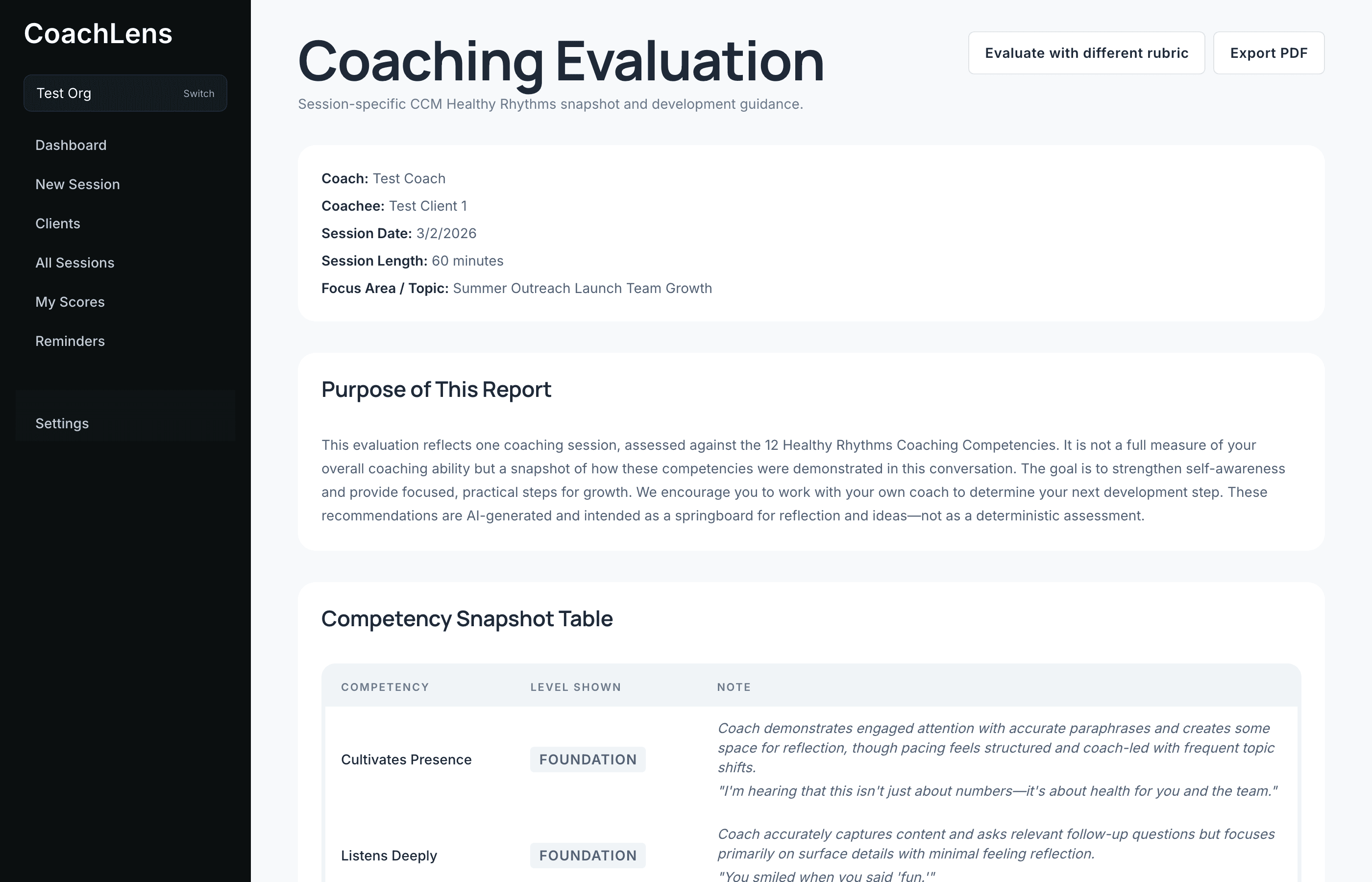
Purpose of This Report
Read this card once, properly. It states what the evaluation is — a snapshot of one conversation — and what it isn't: a measure of your overall coaching ability, or a deterministic assessment. It exists to start a conversation with your own coach, not to settle one.
Competency Snapshot Table
Every competency in the rubric, each with the level shown and a note explaining why, backed by a quotation from your actual session.
Read the notes and the quotations, not just the levels. The levels tell you where you landed; the quotations tell you what you actually did, and that's the part you can work with.
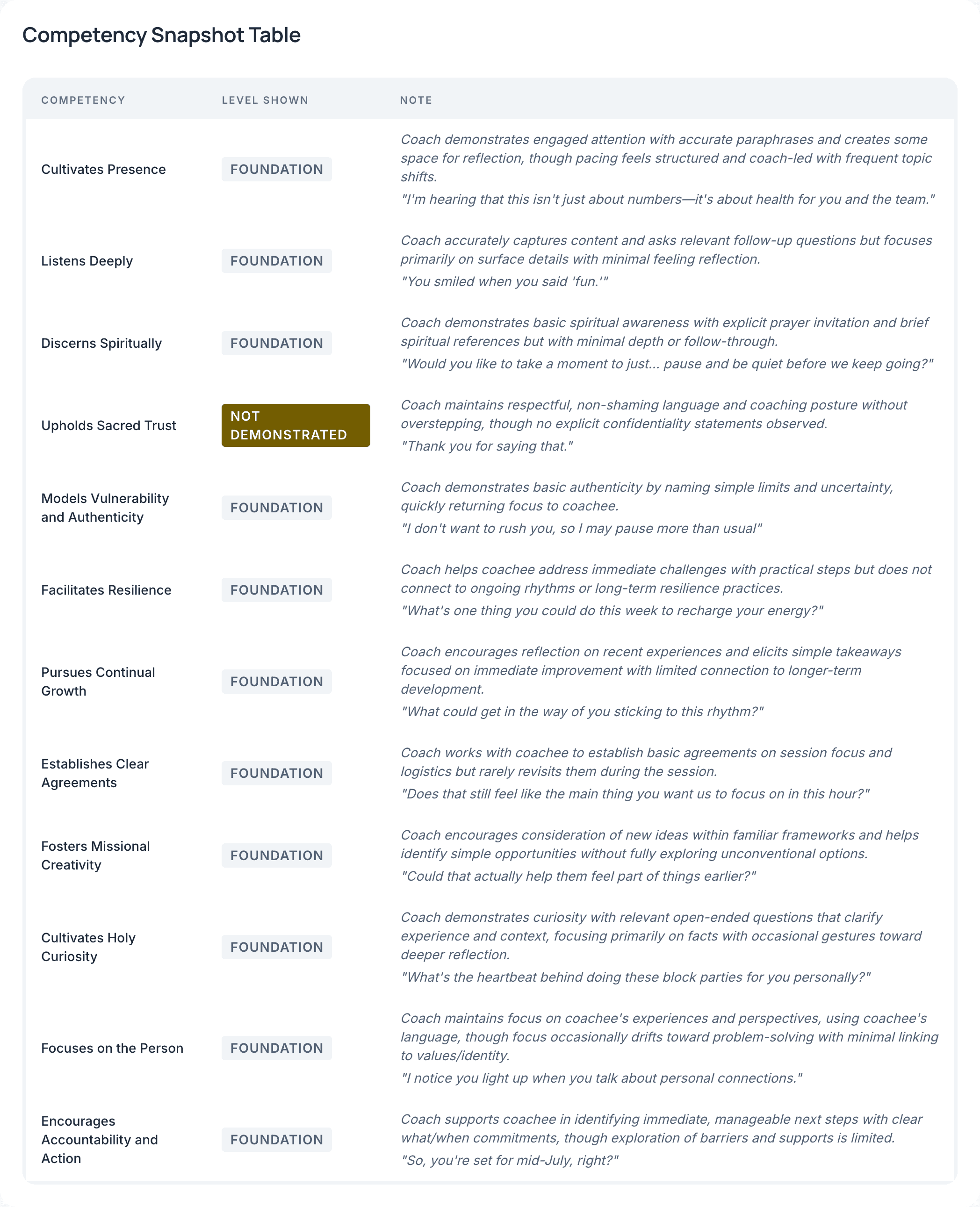
The note and the quotation carry more than the level does. Score Comparison
This chart puts the session against your recent average, competency by competency. It answers a more useful question than the table does: was this session typical for you, or unusual?
On your first few sessions there isn't much to compare against yet. It becomes worth reading around session five.
Strengths, growth areas, and your Top 3
Observed Strengths and Opportunities for Growth summarize the table in plain language.
Top 3 Developmental Priorities is the part to actually act on. Each one gives you a development goal and a concrete practical action — something to try in your next session, not a quality to aspire to.
Then a Summary pulls it together, and a line at the end gives the overall level for the session.
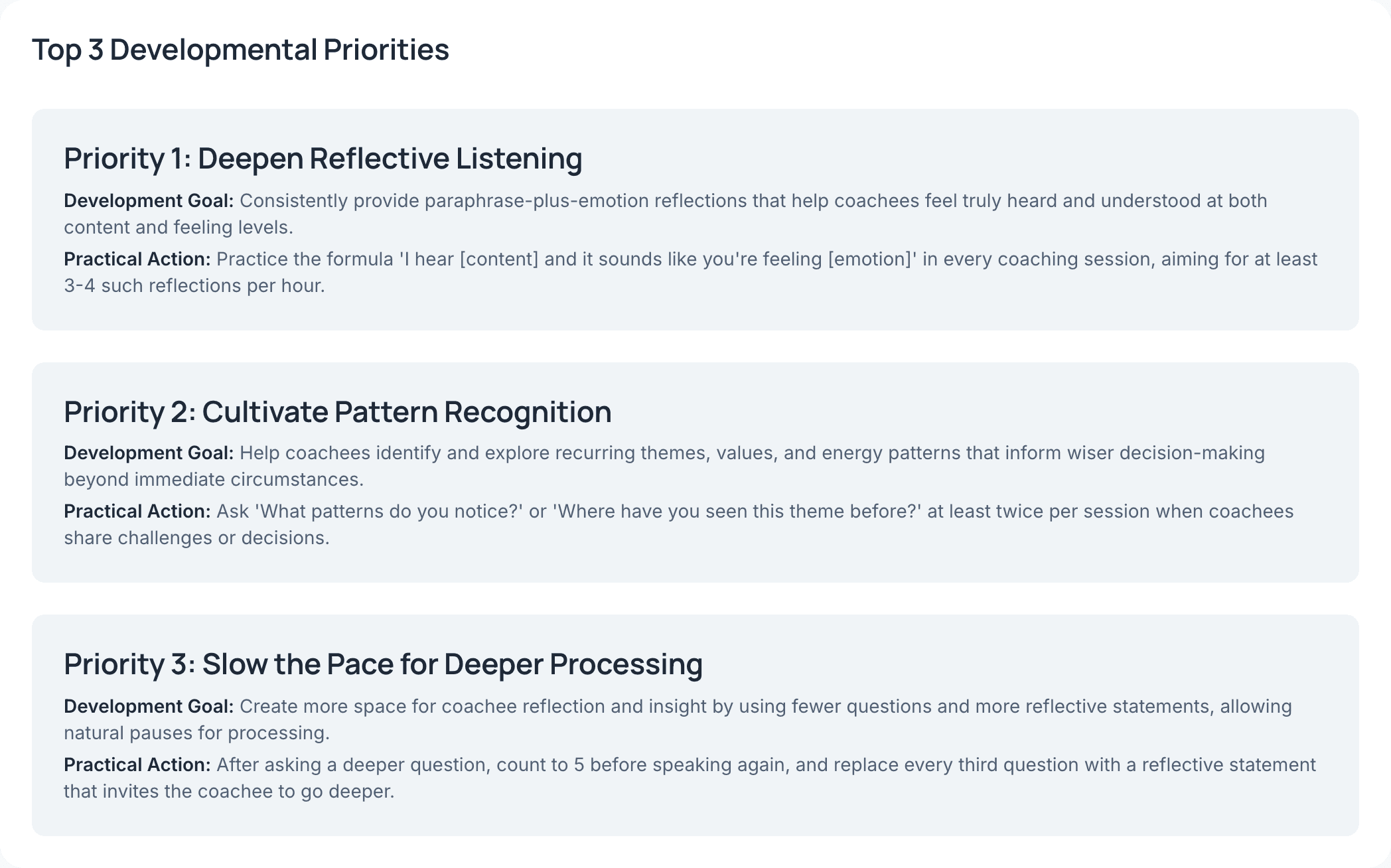
Three things to try, specific to this conversation. Keeping and sharing it
Export PDF at the top saves the whole evaluation — useful for supervision or your own records.
Evaluate with different rubric re-assesses the same conversation against another framework, if your organization offers more than one.